Friday, 7 November 2014

Masa itu Modal Insan (bahagian 1)

Modal

Jumlah Hits : 163


Siti Rohani Surani

Merupakan penyampai dan Penerbit Rancangan Kanan di Radio Institut Kefahaman Islam Malaysia (IKIMfm). Antara rancangan terbitan beliau adalah Usrati, Peka Bahasa, M-Tech, Kompas Kesihatan dan banyak lagi.
Semua orang ada modal yang satu ini. Modal tersebut sangat besar. Cumanya sama ada modal tersebut masih banyak atau tinggal sikit saja. Hadis nabi SAW ada menyebut , “tidak akan berlaku kiamat kecuali bilamana manusia benar-benar merasakan betapa pantasnya masa berlalu”. Setahun macam sebulan, sebulan macam seminggu, seminggu macam sehari. Kita selalu kata tidak sempat itu dan ini. Padahal kita telah hidup dua puluh atau tiga puluh tahun yang lalu dan kita melalui masa yang sama juga, kan tetapi kenapa makin lama kita rasa tidak cukup masa. Jadi modal yang dimaksudkan ialah masa. Kuncinya ialah berkat. Selain masa modal itu juga boleh jadi keadaan yang kita lalui, peluang yang kita ada dan lain-lain.
 
Kita sering berkejar dengan modal yang kita ada iaitu masa. Mudah-mudahan kita mendapat keberkatan masa. Betapa mahalnya masa, sebab itu orang dulu-dulu (nenek moyang kita), sangat bijaksana dalam membuat perumpamaan. Mereka mengatakan, “masa itu ibarat emas”. Maksudnya bila mahal jadi jangan bazirkan. Saya rasa masa itu lebih mahal dari emas, sebabnya sesiapa yang ada duit boleh saja untuk membeli emas, tetapi masa ini walau sekaya mana pun seseorang itu, dia tetap tidak boleh membeli masa yang lebih atau memiliki masa yang lebih banyak daripada orang lain. Semua orang dalam dunia ini mempunyai jumlah masa 24 jam sehari. Jadi pandai-pandailah menggunakannya.
 
Mari kita tanya ada ke tidak berkat pada anak-anak kita, pada harta, masa, ilmu dan lain-lain. Orang dulu-dulu sangat menitikberatkan soal berkat. Biar hidup ala kadar atau sederhana saja tetapi berkat itu ada. Sebagai contoh, cuba bayangkan jika kita ini kaya sangat. Asal hendak apa saja, petik jari saja. Maksudnya mudah untuk kita dapat sebab duit berkepok. Ibaratnya lima keturunan duit tetap tidak habis digunakan, tetapi anak-anak tidak menjadi. Mungkin anak-anaknya tidak pandai atau kaya tetapi tidak dapat menikmati kekayaannya. Tidurnya hanya boleh lena jika beralaskan tikar saja, bila baring diatas tilam yang tebal dan empuk, dia susah untuk tidur. Jadi dimana silapnya? Jawapannya kerana berkat itu tidak ada. Keberkatan yang kita nak cari itu biarlah umpama orang yang hidup beribu-ribu tahun walaupun umur kita tidak panjang manapun.
 
Buatlah sesuatu dengan hati yang hidup atau hidupkan hati. Banyak perkara yang kita buat separuh hati saja atau hendak tidak hendak saja. Jadi ini menandakan yang kita  akan membazirkan modal (masa) kita. Contohnya macam kita menegur atau menyapa orang, kita kadang-kadang seperti tidak berapa hendak tegur, kita menyapa bukan dengan sepenuh hati. Contoh lainnya, macam kita didik anak, kita didik dengan geram saja. Jadi bila anak kita sudah besar, dia tidak jadi sepertimana yang kita harapkan. Jadi inikan telah membazirkan masa kita, kita didik juga tetapi tidak menjadi, kalaulah dididik dengan sepenuh hati, maka kita tidak perlu tambah masa untuk kembali mendidiknya. Memanglah pepatah ada sebut, “latihan membentuk kesempurnaan”, tetapi saya kira kalau sudah selalu sangat buat perkara yang sama lama-lama kita penat juga. Tengok keadaanlah. Setiap keadaan menggunakan cara yang tidak sama.
 
Kita hidup mungkin sudah lebih dua puluh tahun. Tentu jemu bukan untuk melalui perkara yang sama. Lama-lama kita pun jadi tidak larat dan menyampah. Rasa bosan yang amat sangat. Cubalah kembali pupuk semangat dan minat untuk buat perkara yang sama dengan penuh kesungguhan. Hadirkan hati. Contohnya macam dalam berkawan, selama ini kita baik sangat berkawan dengan seseorang, tiba-tiba suatu hati kita bergaduh dengannya. Mulalah kita akan perlukan modal (masa) yang banyak untuk memperbaiki persahabatan. Itukan rugi namanya. Bukankah elok masa itu digunakan untuk perkara yang lain. Sebab itu ada orang yang kita dengar dia mempunyai masa lebih dari 24 jam, maksudnya dia merasakan masanya banyak. Bukan dia tidak ada perkara yang perlu dilakukan tetapi kerana segala urusannya dipermudahkan Allah. Ini adalah kerana masanya berkat. Walaupun banyak hal, tetapi dapat diselesaikan dengan cepat. Maka sebab itu dia mengatakan yang dia mempunyai banyak masa. Jadilah jutawan masa. Tidak timbul istilah tidak cukup masa jika kita bijaksana mengurus dan mengaturkan segala hal. Dalam masa yang sama tidak dinafikan kadangkala ada halangan dan cabaran yang datang yang menyebabkan urusan kita terbantut atau lambat untuk diselesaikan.
 
Kalau kita berkira dengan Allah, maka Allah akan berkira dengan kita. Contohnya kita berkira-kira untuk tunaikan solat, tunggu dihujung-hujung waktu baru kita tunaikan. Maka bimbang-bimbang nanti Allah akan lambat tunaikan hajat kita. Sepuluh minit kita berkira untuk tunaikan solat, nanti mana tahu satu jam urusan kita tidak Allah permudahkan. Buatlah sesuatu dengan “itqan” iaitu bersungguh-sungguh. Masa adalah perkara yang akan ditanya oleh Allah diakhirat nanti. Masa yang kita ada untuk apa kita gunakan. Tentang masa, yang berlalu jadikan kenangan, yang akan datang kita hargai. Janganlah kita biarkan modal kita habis berlalu dengan tidak kita memanfaatkannya dengan sepenuh yang mungkin. Yang penting bukan banyak mana masa yang kita ada, tetapi kualiti apa yang kita letak didalamnya. Moga-moga kita berjaya meraih keberkatan masa yang akan memberi kesan terhadap keberkatan hidup kita. Bila dapat berkat segalanya mudah dan teratur.

Thursday, 30 October 2014

How to handle toxic people

http://www.sbs.com.au/news/article/2014/10/28/comment-how-handle-toxic-people

Comment: How to handle toxic people

  • (AAP)
90% of top performers are skilled at managing their emotions in times of stress - including neutralising toxic people.
By
Travis Bradberry

28 Oct 2014 - 11:12 AM  UPDATED 28 Oct 2014 - 11:12 AM

Toxic people defy logic. Some are blissfully unaware of the negative impact that they have on those around them, and others seem to derive satisfaction from creating chaos and pushing other people’s buttons. Either way, they create unnecessary complexity, strife, and worst of all, stress.
 
Studies have long shown that stress can have a lasting, negative impact on the brain. Exposure to even a few days of stress compromises the effectiveness of neurons in the hippocampus—an important brain area responsible for reasoning and memory. Weeks of stress cause reversible damage to neuronal dendrites (the small “arms” that brain cells use to communicate with each other), and months of stress can permanently destroy neurons. Stress is a formidable threat to your success—when stress gets out of control, your brain and your performance suffer.
 
Most sources of stress at work are easy to identify. If your non-profit is working to land a grant that your organization needs to function, you’re bound to feel stress and likely know how to manage it. It’s the unexpected sources of stress that take you by surprise and harm you the most.
 
Recent research from the Department of Biological and Clinical Psychology at Friedrich Schiller University in Germany found that exposure to stimuli that cause strong negative emotions—the same kind of exposure you get when dealing with toxic people—caused subjects’ brains to have a massive stress response. Whether it’s negativity, cruelty, the victim syndrome, or just plain craziness, toxic people drive your brain into a stressed-out state that should be avoided at all costs.
 
The ability to manage your emotions and remain calm under pressure has a direct link to your performance. TalentSmart has conducted research with more than a million people, and we’ve found that 90% of top performers are skilled at managing their emotions in times of stress in order to remain calm and in control. One of their greatest gifts is the ability to neutralize toxic people. Top performers have well-honed coping strategies that they employ to keep toxic people at bay.
 
While I’ve run across numerous effective strategies that successful people employ when dealing with toxic people, what follows are twelve of the best. To deal with toxic people effectively, you need an approach that enables you, across the board, to control what you can and eliminate what you can’t. The important thing to remember is that you are in control of far more than you realize.

They set limits (especially with complainers)

Complainers and negative people are bad news because they wallow in their problems and fail to focus on solutions. They want people to join their pity party so that they can feel better about themselves. People often feel pressure to listen to complainers because they don’t want to be seen as callous or rude, but there’s a fine line between lending a sympathetic ear and getting sucked into their negative emotional spiral.
You can avoid this only by setting limits and distancing yourself when necessary. Think of it this way: if the complainer were smoking, would you sit there all afternoon inhaling the second-hand smoke? You’d distance yourself, and you should do the same with complainers. A great way to set limits is to ask complainers how they intend to fix the problem. They will either quiet down or redirect the conversation in a productive direction.

They don’t die in the fight

Successful people know how important it is to live to fight another day, especially when your foe is a toxic individual. In conflict, unchecked emotion makes you dig your heels in and fight the kind of battle that can leave you severely damaged. When you read and respond to your emotions, you’re able to choose your battles wisely and only stand your ground when the time is right.

They rise above

Toxic people drive you crazy because their behavior is so irrational. Make no mistake about it; their behavior truly goes against reason. Which begs the question, why do you allow yourself to respond to them emotionally and get sucked into the mix?
The more irrational and off-base someone is, the easier it should be for you to remove yourself from their traps. Quit trying to beat them at their own game. Distance yourself from them emotionally and approach your interactions like they’re a science project (or you’re their shrink, if you prefer the analogy). You don’t need to respond to the emotional chaos—only the facts.

They stay aware of their emotions

Maintaining an emotional distance requires awareness. You can’t stop someone from pushing your buttons if you don’t recognize when it’s happening. Sometimes you’ll find yourself in situations where you’ll need to regroup and choose the best way forward. This is fine and you shouldn’t be afraid to buy yourself some time to do so.
Think of it this way—if a mentally unstable person approaches you on the street and tells you he’s John F. Kennedy, you’re unlikely to set him straight. When you find yourself with a coworker who is engaged in similarly derailed thinking, sometimes it’s best to just smile and nod. If you’re going to have to straighten them out, it’s better to give yourself some time to plan the best way to go about it.

They establish boundaries

This is the area where most people tend to sell themselves short. They feel like because they work or live with someone, they have no way to control the chaos. This couldn’t be further from the truth. Once you’ve found your way to rise above a person, you’ll begin to find their behavior more predictable and easier to understand. This will equip you to think rationally about when and where you have to put up with them and when you don’t. For example, even if you work with someone closely on a project team, that doesn’t mean that you need to have the same level of one-on-one interaction with them that you have with other team members.
You can establish a boundary, but you’ll have to do so consciously and proactively. If you let things happen naturally, you are bound to find yourself constantly embroiled in difficult conversations. If you set boundaries and decide when and where you’ll engage a difficult person, you can control much of the chaos. The only trick is to stick to your guns and keep boundaries in place when the person tries to encroach upon them, which they will.

They won’t let anyone limit their joy

When your sense of pleasure and satisfaction are derived from the opinions of other people, you are no longer the master of your own happiness. When emotionally intelligent people feel good about something that they’ve done, they won’t let anyone’s opinions or snide remarks take that away from them.
While it’s impossible to turn off your reactions to what others think of you, you don’t have to compare yourself to others, and you can always take people’s opinions with a grain of salt. That way, no matter what toxic people are thinking or doing, your self-worth comes from within. Regardless of what people think of you at any particular moment, one thing is certain—you’re never as good or bad as they say you are.

They don’t focus on problems—only solutions

Where you focus your attention determines your emotional state. When you fixate on the problems you’re facing, you create and prolong negative emotions and stress. When you focus on actions to better yourself and your circumstances, you create a sense of personal efficacy that produces positive emotions and reduces stress.
When it comes to toxic people, fixating on how crazy and difficult they are gives them power over you. Quit thinking about how troubling your difficult person is, and focus instead on how you’re going to go about handling them. This makes you more effective by putting you in control, and it will reduce the amount of stress you experience when interacting with them.

They don’t forget

Emotionally intelligent people are quick to forgive, but that doesn’t mean that they forget. Forgiveness requires letting go of what’s happened so that you can move on. It doesn’t mean you’ll give a wrongdoer another chance. Successful people are unwilling to be bogged down unnecessarily by others’ mistakes, so they let them go quickly and are assertive in protecting themselves from future harm.

They squash negative self-talk

Sometimes you absorb the negativity of other people. There’s nothing wrong with feeling bad about how someone is treating you, but your self-talk (the thoughts you have about your feelings) can either intensify the negativity or help you move past it. Negative self-talk is unrealistic, unnecessary, and self-defeating. It sends you into a downward emotional spiral that is difficult to pull out of. You should avoid negative self-talk at all costs. 

They limit their caffeine intake

Drinking caffeine triggers the release of adrenaline. Adrenaline is the source of the “fight-or-flight” response, a survival mechanism that forces you to stand up and fight or run for the hills when faced with a threat. The fight-or-flight mechanism sidesteps rational thinking in favor of a faster response. This is great when a bear is chasing you, but not so great when you’re surprised in the hallway by an angry coworker.

They get some sleep

I’ve beaten this one to death over the years and can’t say enough about the importance of sleep to increasing your emotional intelligence and managing your stress levels. When you sleep, your brain literally recharges, shuffling through the day’s memories and storing or discarding them (which causes dreams), so that you wake up alert and clear-headed. Your self-control, attention, and memory are all reduced when you don’t get enough—or the right kind—of sleep. Sleep deprivation raises stress hormone levels on its own, even without a stressor present.
A good night’s sleep makes you more positive, creative, and proactive in your approach to toxic people, giving you the perspective you need to deal effectively with them.

They use their support system

It’s tempting, yet entirely ineffective, to attempt tackling everything by yourself. To deal with toxic people, you need to recognize the weaknesses in your approach to them. This means tapping into your support system to gain perspective on a challenging person. Everyone has someone at work and/or outside work who is on their team, rooting for them, and ready to help them get the best from a difficult situation. Identify these individuals in your life and make an effort to seek their insight and assistance when you need it. Something as simple as explaining the situation can lead to a new perspective. Most of the time, other people can see a solution that you can’t because they are not as emotionally invested in the situation.

Bringing it all together

Before you get this system to work brilliantly, you’re going to have to pass some tests. Most of the time, you will find yourself tested by touchy interactions with problem people. Thankfully, the plasticity of the brain allows it to mold and change as you practice new behaviors, even when you fail. Implementing these healthy, stress-relieving techniques for dealing with difficult people will train your brain to handle stress more effectively and decrease the likelihood of ill effects.
This article was originally published on Quartz. Click here to view the original. © All rights reserved. Distributed by Tribune Content Agency.

Friday, 24 October 2014

Berakhirnya musim haji


Satu kisah yang memberikan inspirasi kepada kita agar benar-benar berserah kepada Allah. Keikhlasan itu akan di balas dgn ganjaran yang tidak terkira nilainya...... kekadang di balas oleh Allah di muka bumi ini lagi. Jzk pada Ustazah Maznah yang telah menukilkan kisah berikut:
Kebanyakan Jemaah Haji yang terpilih menjadi tetamu Allah pada tahun ini telah pulang dengan membawa kenangan manis yang sukar dilupakan. Dikongsikan di sini kenangan yang pernah dilalui oleh insan yang terpilih menjadi tetamu Allah.


Berakhirnya Musim Haji

Musim haji 1431 berakhir sudah. Para tetamu Allah berduyun-duyun pulang meninggalkan kota suci dengan membawa seribu kenangan pahit dan manis sepanjang mengerjakan ibadah haji, rukun Islam yang ke 5. Apa yang paling penting ialah perasaan gembira dengan janji syurga serta diampunkan dosa.

Saya menerima sepucuk surat melalui email yang diutus oleh seorang sahabat dari Negara Arab mengisahkan pengalaman seorang tetamu Allah yang sungguh mencuit hati. Justeru saya rasa terpanggil untuk berkongsi dengan sahabat semua kisah tersebut.

Begini ceritanya:

Setelah berakhirnya musim haji, lapangan terbang Jedah penuh sesak dengan para jamaah yang menunggu pesawat untuk pulang ke tanah air masing-masing.

Antara mereka ialah Haji Sa’eid yang mengambil tempat duduk di sebuah kerusi. Di sebelahnya jamaah lain yang kelihatannya berasal dari negara yang sama dengannya.

Kedua-duanya bersalaman, berkenalan dan berbual mesra walaupun baru pertama kali berjumpa.
Lelaki yang baru berkenalan dengan Haji Sa’eid itu (kita panggil dia Haji Abdul Ghani atau ringkasnya HAG) bercerita mengenai dirinya:

- Saya seorang konteraktor yang Berjaya, Alhamdulillah. Tahun ini Allah telah menganugerahkan rezeki di mana saya berjaya mendapat satu tender yang saya kira cukup untuk membiayai keperluan sepanjang hayat saya. Dengan rezeki yang melimpah ruah itu, saya berikrar perkara pertama yang mesti saya lakukan ialah menunaikan haji kali ke 10 sebagai tanda syukur kepada Allah di atas nikmat-Nya yang begitu banyak. Dan sebelum berangkat, saya tidak lupa mengeluarkan zakat, memberi sedekah agar haji saya diterima di sisi Allah. Syukur kepada Allah, sekarang saya telah dapat menyelesaikan haji saya yang ke 10. Haji Sa’eid (HS) mengangangguk-anggukkan kepalanya sambil berkata:

- Haji yang mabrur, usaha yang disyukuri dan dosa diampuni insya Allah.

HAG tersenyum sambil mengaminkan doa HS. Kemudian dia bertanya:
- Anda bagaimana ya akhi? Adakah anda juga mempunyai cerita tertentu di sebalik haji anda?

 HS menjawab dengan teragak-agak:
- Demi Allah ya akhi. Ceritanya sangat panjang dan saya tidak mahu memeningkan kepala anda mendengarnya.

 HAG tertawa pendek. Dengan nada mesra dia berkata:
- Tak mengapa ya akhi. Kita di sinipun bukan buat apa selain menunggu saja. Ceritakanlah kisahmu itu!

 HS turut ketawa seraya berkata penuh makna mengenangkan hari-hari yang dilalui sebelum dijemput oleh Allah menjadi tetamu-Nya yang dimuliakan.

- Ya, menunggu. Sebenarnya itulah permulaan cerita saya. Sesungguhnya saya telah menunggu saat untuk menunaikan haji beberapa tahun lamanya. Saya telah bekerja sebagai perawat fisioterapy sejak 30 tahun yang lalu, iaitu sejurus selepas menamatkan pengajian. Tak lama lagi saya akan bersara. Anak-anak semuanya telah berumahtangga dan telah terlepas dari tanggungan saya. Maka saya membuat keputusan menggunakan simpanan yang ada untuk menunai ibadah haji yang telah sekian lama saya impikan pada tahun ini. Maklumlah umur kita tiada siapa yang tahu bila akan habis?

- Saya mengeluarkan semua wang simpana dan berazam untuk pergi mendaftarkan diri di jabatan pengurusan haji selepas tugas saya selesai pada hari itu. Sebelum meninggalkan hospital tempat saya bekerja, saya terserempak dengan seorang ibu yang selalu membawa anaknya yang lumpuh untuk mendapatkan rawatan. Wajahnya sugul, muram dan kusam. Dia menghampiri saya seraya berkata:
- Selamat tinggal akhi Sa’eid. Ini merupakan kunjungan saya yang terakhir ke hospital ini.
Saya hairan mendengar kata-katanya itu. Saya terfikir, mungkin dia tidak berpuas hati dengan rawatan yang saya berikan dan telah memilih pusat rawatan lain untuk merawat anaknya. Setelah saya luahkan kehairanan saya itu, dia menjawab dengan suara yang sebak:

- Akhi Sa’eid, sesungguhnya Allah menjadi saksi bahawa anda seperti mengasihi anak saya lebih daripada ayahnya dan rawatan yang anda berikan telah banyak membantu memulihkan penyakitnya sedikit demi sedikit meskipun sebelumnya kami rasakan tidak ada harapan untuk dia sembuh.
HAG tidak dapat membendung perasaan hairannya terhadap keputusan ibu mahu menghentikan rawatan anaknya, lalu bertanya:
-
Aneh, kalau dia berpuas hati dengan rawatan yang anda beri beri, dan anaknya semakin sembuh, kenapa dia mahu mengehentikan rawatan?

- Itu jugalah yang menghairankan saya. Saya segera ke bahagian pentadbiran, bertemu dengan pegawai di situ untuk mengetahui sebabnya. Saya amat terkilan seandainya keputusan yang dibuat oleh ibu itu berpunca dari kecuaian saya. Pegawai menjelaskan bahawa keputusan itu tidak ada kena mengena dengan saya. Sebenarnya suami wanita itu telah kehilangan pekerjaan, jadi mereka tidak mampu lagi menanggung kos rawatan. Justeru mereka membuat keputusan untuk menghentikan rawatan anak mereka.

 Tak terkata sedihnya hati HAG mendengar penjelasan HS itu membuat dia mengeluh panjang:
-
La hawla wa la quwwata illa billah. Kasihan wanita itu. Bukan sedikit manusia yang terpaksa berhenti atau diberhentikan kerja pada zaman ini. Jadi apa yang anda lakukan ya akhi?

- Saya pergi bertemu dengan Pengarah, merayu supaya rawatan anak itu diteruskan dan kosnya ditanggung oleh pihak hospital. Namun pengarah tidak setuju sama sekali. Dia berkata, hospital ini bukan badan kebajikan untuk golongan fakir dan miskin. Kalau tidak mampu, mereka tidak perlu datang ke sini!

- Saya keluar dari biliknya dengan hampa. Saya tidak dapat membayangkan nasib anak itu jika rawatan dihentikan? Tiba-tiba tanpa saya sedari tangan saya meraba-raba wang yang ada di dalam saku saya, wang yang saya keluarkan untuk membayar kos menunaikan haji. Buat seketika saya terpaku di tempat saya berdiri. Kemudian saya mengangkat muka ke langit sambil meluahkan isi hati kepada Tuhan:

- Ya Allah, Engkau Maha Tahu apa yang ada di dalam hatiku. Engkau Maha Tahu bahawa tidak ada yang labih aku cintai selain daripada menunaikan haji di Rumah-Mu dan menziarahi Masjid Nabi-Mu. Aku telah berusaha sepanjang hayatku. Setiap detik, setiap waktu aku menghitung saat yang ditunggu-tunggu. Tetapi kini aku terpaksa membatalkan janjiku dengan-Mu. Maka ampunilah aku ya Tuhanku. Sesungguhnya Engkau Maha Pengampun lagi Maha Mengasihani.

- Saya pergi bertemu dengan kerani kewangan, dan saya berikannya semua wang yang ada pada saya sebagai pendahuluan kos rawatan anak itu selama 6 bulan. Saya meminta kerani memberitahu ibu itu, anaknya boleh meneruskan rawatan kerana pihak hospital mempunyai tabungan khas untuk kes-kes separtinya.

 Air mata HAG berguguran mendengar penjelasa HS. Dia berkata:
- Semoga Allah memberkatimu dan membanyakkan lagi orang-orang sepertimu. Tetapi sekiranya anda telah mensedekahkan semua wang yang anda miliki, bagaimana anda dapat menunaikan haji tahun ini?

- Nampaknya anda tidak sabar untuk mendengar kesudahan cerita saya. Adakah anda telah jemu? Begini sambungannya...

- Selepas menyerahkan wang itu saya pulang ke rumah dengan perasaan bercampur-campur; sedih kerana terlepas peluang untuk menunaikan haji yang merupakan satu-satunya peluang sepanjang hidup saya selama ini dan gembira kerana dapat melepaskan ibu dan anaknya dari kesusahan yang ditanggung mereka. Saya tidak dapat membendung dua perasaan yang bercampur-campur itu sehingga akhirnya saya tertidur dalam linangan air mata...

Di dalam tidur saya bermimpi, mimpi yang sungguh membahagiakan. Saya sedang bertawaf di sekeliling Kaabah, orang ramai berpusu-pusu mengucapkan tahniah kepada saya, haji mabrur wahai Haji Sa’eid! Sesungguhnya anda telah menunaikan haji di langit sebelum menunaikan haji di bumi. Doakan untuk kami wahai Haji Sa’eid!

Kemudian saya terjaga. Demi Allah, saya rasa sungguh bahagia. Kebahagiaan yang luar biasa sekalipun saya sudah hampir pasti tidak akan berpeluang mendapat gelaran haji lagi buat selama-lamanya. Saya memuji Allah sebanyak-banyaknya, bersyukur di atas segala-galanya serta menerima dengan redha segala ketentuan-Nya. Sejurus terbangun dari tidur, telefon saya berdering. Panggilan dari tuan pengarah hospital.

Beliau berkata:
- Wahai Sa’eid, saya perlukan bantuan kamu. Salah seorang ahli lembaga pengarah hospital ini hendak menunaikan haji pada tahun ini. Dia perlukan seorang pengiring yang bertindak sebagai perawat peribadi untuk menjaga kesihatannya dan memenuhi apa-apa keperluannya. Perawat peribadinya tidak dapat pergi kerana isterinya yang sedang sarat mengandung, menunggu saat hendak bersalin pada bila-bila masa sahaja. Jadi dia tidak seanggup meninggalkannya. Bolehkah kamu tolong saya, menjadi pengiring kepada ahli lembaga pengarah itu sebagai ganti perawat peribadinya? Tolonglah! Saya takut akan kehilangan jawatan kalau kehendaknya tidak dipenuhi. Dia adalah pemilik separuh daripada saham hospital ini.

Seperti tidak sabar saya bertanya tuan pengarah:
- Sebagai pengiring, adakah dia akan membenarkan saya menunaikan haji sekali?

 - Tentu boleh!

Tanpa berlengah saya terus menyatakn persetujuan untuk menjadi pengiring ahli lembaga pengarah itu tanpa apa-apa bayaran. Inilah saya telah dapat menunaikan haji saya pada tahun ini tanpa mengeluarkan belanja sedikitpun.

Meskipun saya tidak meminta apa-apa bayaran, dia tetap membayar juga kerana berpuas hati dengan khidmat yang saya beri sepanjang menunaikan haji. Saya mengambil kesempatan menceritakan nasib ibu yang miskin itu. Dia bersetuju menanggung semua kos rawatan anak wanita itu dan akan mencadangkan supaya diwujudkan tabung di hospital untuk membantu pesakit yang miskin dan fakir. Dan dia juga berjanji akan memberikan pekerjaan yang sesuai dengan kelayakan yang ada pada suami wanita itu di salah sebuah syarikatnya.

HAG bangun dari kerusinya lalu mengucup dahi HS dan berkata:
- Demi Allah, saya tidak pernah rasa malu seperti yang saya rasai ketika ini. Wahai akhi, sesungguhnya saya telah menunaikan haji berkali-kali. Saya menyangka bahawa saya telah melakukan sesuatu yang hebat dan kedudukan saya di sisi Allah kian terangkat setiap kali saya selesai menunaikan haji. Kini saya sedar bahawa satu kali haji yang anda lakukan menyamai 1000 kali haji saya dan orang-orang seperti saya. Saya telah pergi sendiri ke rumah Allah sedangkan anda dipanggil oleh Allah datang ke rumah-Nya!

HAG berlalu meninggalkan HS sambil mulutnya tidak henti-henti memohon ampun dari Allah ‘Azza wa Jalla.

اللَّهُمَّ إِنِّى أَعُوذُ بِكَ مِنْ زَوَالِ نِعْمَتِكَ وَتَحَوُّلِ عَافِيَتِكَ وَفُجَاءَةِ نِقْمَتِكَ وَجَمِيعِ سَخَطِكَ

Ya Allah, sesungguhnya aku berlindung denganMu daripada kehilangan ni’matMu, bertukarnya kesejahteraan yang Engkau berikan, ditimpa kemurkaanMu secara mendadak, dan dari segala kemurkaanMu.

Thursday, 23 October 2014

Modern Islamic Home: Aspects & Principles Part 1

http://blog.islamiconlineuniversity.com/the-modern-islamic-home-aspects-and-principles-part-i/

We live in a world where our is greater than it has ever been, encompassing the entire globe fueled due to the advent of international news and the Internet.  Meanwhile our sphere of influence has been ever shrinking due to the larger number of people cohabiting the world simultaneously and a loss of sense of community in many parts of the world with even the family unit breaking under a variety of stresses and pressures.  Yet, despite our inability to influence the world, the state, the community or even our families, we generally still have a living environment which we have complete control over.

The environment we live in might be extremely polluted with un-Islamic people, culture, norms, forbidden activities and indulgences widespread.  But the environment we spend those hours eating, sleeping and spending our idle time is of utmost importance simply because we do have the ability to control it.  Our homes are a critical part of our life and the idiom “home is where the is” shows the great role it plays in our life, yet, more importantly, we should be aiming to draw near Allah  Allah Subhanahu-wa-Taala                                       
We should transform our homes so that remembering Allah  Allah Subhanahu-wa-Taala is where our heart is, ultimately experiencing true and contentment.
What is an Islamic home?  Can the modern home be Islamic?  The answers to these questions must be derived from pearls of wisdom of the Sunnah of our beloved Prophet Muhammad SAW .  Nearly all Islamic principles apply to the home given it is a place we spend so much of our time in; and should be our place of safety, security, grounding, peace of mind and recovery.

Attending to Neighborly Needs

Neighbors not only deserve kindness but they have many rights to it.  One should bear in mind remembering their neighbors when considering their home.  A successful and positive community comes about when neighbors attend to each others rights which could ultimately change the environment of the whole area.  There are many rights afforded to neighbors which make Islamic building codes, and etiquette to neighbors when cooking or after having purchased fruit.

Narrated Samurah MALE radi-allahu-anhu : The SAW said: “The of a home has more right to the home.” – .

The rights are actually so great that they are stressed in the Sunnah.

Mujahid MALE radi-allahu-anhu narrated: “Abdullah bin Amr had a sheep slaughtered for his family, so when he came he said: ‘Have you given some to our neighbor, the Jew? Have you given some to our neighbor, the Jew? I heard the Messenger of Allah SAW saying: ‘Jibril continued to advise me about (treating) the neighbors so (kindly and politely), that I thought he would order me (from Allah) to make them heirs.” -Tirmidhi.

The book : Proven Techniques of How to Succeed in Today’s World by Shaykh Mirza Yawar Baig goes on to list these rights in detail which the Messenger of Allah SAW  narrated to the Sahaba, which we should bear in mind to maintain such honorable and noble tradition even as hard as it can be, in our modern style communities:
1. Assist him when he asks for assistance.
2. Give him a loan if he needs it.
3. Help him if he is needy.
4. Visit him when he is ill.
5. Accompany his funeral when he dies.
6. Congratulate him on happy occasions.
7. Console him in adversity.
8. Do not build your house higher than his without his permission lest his ventilation is obstructed.
9. If you buy fruits, send some for him as a present. If you cannot do so, take the fruit into your house concealed so that he cannot see it. Don’t allow your children to take it out and eat openly in case his children see it and become grieved.
10. Don’t let the smoke from your house get into his house causing him annoyance.

Acts of
The home should be a spiritual abode.  Prayers, supplications, ghusl and wudu, acquiring Islamic knowledge, reciting the Quran are just some of the spiritual activities that should be undertaken on a routine basis.  Not doing so will turn the home into a negative atmosphere.  If you are returning home after praying in the mosque, then it is recommended to save the optional prayers for the home to bring light, blessings and angels into it.
MALE radi-allahu-anhu narrated that: The Prophet SAW said: “The most virtuous prayer of yours is in your homes, except for the obligatory.” – Tirmidhi.

Avoiding Idolatry, Dogs, Etc.

Portraits, statues and the like should not be displayed whether it be paintings, sculptures, photographs or whatever the material form.  Dogs are also not allowed in an Islamic home with the exception of a guard dog when security is an issue.  Some people can make these types of mistakes unknowingly out of ignorance, especially in cultures where it is common place.  Cleaning the home from these types of things will bring immediate .
Narrated Abu Talha MALE radi-allahu-anhu : The Prophet SAW said, “Angels do not enter a house that has either a dog or a picture in it.” – Al-Bukhari.

Simplicity
A very important aspect of the home is to practice simplicity.  The Prophet SAW would not enter a home which was excessive in the adornments and embellishments of this world.  Wealth should be spent where it’s needed; not in a manner where you want a beautiful home that is spiritually empty and shallow in all other ways.
Abu Umamah bin Tha’labah MALE radi-allahu-anhu reported: The Companions of Messenger of Allah SAW mentioned the life of the world before him. He SAW said, “Do you not hear? Do you not hear? Simplicity (in life) is part of Faith, simplicity is part of Faith.” – Abu Dawud.
The furniture and food also need not be extravagantly elegant or excessive.  The principle applies to the home and all that is inside the home.

Remembering Allah and the Hereafter
The ultimate aim of this life is to worship and please Allah Allah Subhanahu-wa-Taala maintaining the hereafter as the goal and not any small benefits of the worldly life.  The Quran is very firm on this and thus our home should reflect it given the amount of time spent in it.  We need reminders so that we do not forget Allah Allah Subhanahu-wa-Taala and what He Allah Subhanahu-wa-Taala has blessed us with and the home is an essential place for them.  Specific strategies from keeping the Quran near at hand or prayer clothing nearby or a siwak (tooth stick) next to the place one does wudu, are of the many examples that will be looked at in detail later in this series.
“…the men who remember Allah often and the women who do so – for them Allah has prepared forgiveness and a great reward.” – (Al- ‘Ahzab 33:41)

Wednesday, 15 October 2014

A journey of joy: an American convert’s first Hajj

http://muslimvillage.com/2014/10/14/58588/a-journey-of-joy-an-american-converts-first-hajj/

A journey of joy: an American convert’s first Hajj

by Huffington Post
Source: huffingtonpost.com

Filed under: Featured,Lifestyle,People |
                                      
How An Illinois Mom Converted To Islam And Found Peace And Joy During Her Very First Hajj
By: Huffington Post
Sourcehttp://www.huffingtonpost.com/
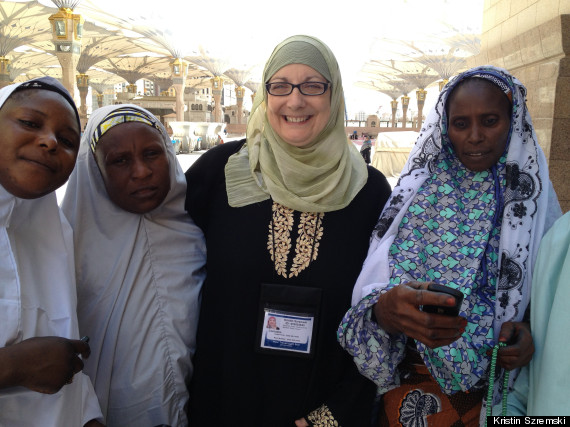
Kristin Szremski is a 53-year-old mom from Palo Hills, Illinois. Born into a Missouri-Synod Lutheran family, she first converted to Catholicism before finding her place in Islam. This year, Szremski was one of the hundreds of thousands of Muslims who were drawn to Mecca between October 2 – 7 to complete the fifth pillar of Islam, the Hajj.
She tells Huffington Post about her experience below. Some answers have been edited for length and clarity.
1. How did you come to Islam and what was it about the religion that moved you?
I was a special assignment reporter for the Star Newspapers in suburban Chicago in 2000. I was assigned to cover the Arab community. At that time, I didn’t know anything about Islam — I was raised as a Missouri-Synod Lutheran and we had been taught that all religions and prophets that came after Jesus were false.
During the six weeks I had for research, I interviewed many, many Arab Muslims. My conversion was not something that happened overnight; it probably took more than 18 months. I was fascinated to learn that Islam had all the same stories as the Bible as well as the same characters.
To back up a bit — I was raised Lutheran, but converted to Catholicism when I was about 40. I always wanted to belong to a large community and I was intrigued by the Catholic Church. Since my husband at the time was Catholic, I decided to join the church. That had a huge impact on my later conversion to Islam because where the Lutheran church believed in the Bible literally, the Catholic Church encouraged knowledge, questions and also gave us the historical context for the books contained in the Christian canon. This allowed me to open my mind to the possibility that the Quran was truly the revealed word of God.
Once I came to believe this, it was an easy step to believe Muhammad (peace be upon him) was the messenger and prophet. The harder part was letting go of my belief that Jesus was the Son of God. Ultimately, it was the passages in the Quran where God tells us that He was not begotten nor has He begotten and similar ones that finally helped me. Also, Jesus figures prominently in Islam so I wasn’t letting go of him, but just the idea that he is God.
In the end, my conversion came while I was praying. The date was July 21, 2001. I was in a hotel room in Washington DC, where I’d gone to cover a meeting for a magazine I was writing for. I had the Quran open on the bed before me and I was actually on my knees praying, asking God to lead me to the truth when suddenly I declared the Shahada –- that there is no God but Allah and that Muhammad is His messenger. I later made a public declaration in Arabic but for all purposes it was at that moment that I became a Muslim.
I love Islam because of its purity, its simplicity and its truth. The Muslims I had met were truly pleasant, patient and well-mannered people.
2. We understand this is your first hajj. Were you nervous at all?
I was very nervous about this trip because it is a heavy spiritual journey, which means there’s a lot of personal reflection. It is also a very physical experience, with many different components taking place over several days. I’ve had two surgeries on my neck and lower back because of the degenerative arthritis and it has left me with some slight neurological deficiencies. One of the biggest of these is weakness in my legs, which things like overuse, fatigue, lack of sleep, extreme conditions can exacerbate.
3. Was there someone who showed you around? How did you know what to do?
I was traveling with a tour group, called Noor Travel, out of Milwaukee. The tour guide was extremely helpful. Plus, my lovely roommates are Arab American women who can help with the language as need be. There are also people in the group who have done this before who can offer advice. When all is said and done, though, 3 million people in one small place is pretty overwhelming and daunting so I pretty much learned as I went along.
4. Are there any parts of the hajj that you were particularly looking forward to?
Muslims pray in the direction of the Kaaba from wherever they are in the world. Being in the presence of God in Mecca, at the very center of the Earth, where Adam and Eve came to earth from the Garden of Eden, where Abraham and Ishmael rebuilt the Kaaba, and where Muhammad (peace be upon him) lived and received his first revelations from God is a tremendously invigorating and rejuvenating experience. To be able to see the Kaaba right in front of me after all these years was powerful and something I don’t believe I will ever forget.
5. How did it go?
I did much better physically than I expected. I’m actually feeling better now than before I left for the trip, mainly due to an improved state of mind that this trip brought about. In addition, Islam is always about moderation and the religion is not meant to be difficult. Therefore, certain accommodations are possible during the rites of Hajj.
There are three types of Tawafs, or circumambulations of the Kaaba. During each Tawaf, Muslims circle the Kaaba seven times.
I was able to use a wheelchair to circumambulate the Kaaba the first time.
During the second Tawaf, called Tawaf Al-Ifadah. I wanted to walk by myself so I could really concentrate on ‘talking to God,’ in my supplications and in worship. I also wanted to make the physical effort for God, as so much of Islam is about taking action with the help of God. This was an extremely beautiful experience for me, extremely spiritual. I finished the entire rite in just under three hours. Then it took me about one hour to make the usual 10 minute trip back to the hotel because I had overdone it a bit.
I was not able to finish the third Tawaf, called Tawaf Al-Wada or the Farewell Tawaf, because I was unprepared for the millions of people who were there at the same time as me. I was getting hurt and not strong enough to withstand the crush of people. So, sadly, I had to leave without completing it. To expiate for missing that rite, I paid to have a sheep slaughtered and its meat given to the poor.
Throwing stones at pillars that symbolize the spots where Satan tempted Abraham, who was preparing to sacrifice his son, is another rite of Hajj. Because of the sheer physicality it takes to walk up a steep hill to the throwing area and the danger of being in a crowd of a few million people throwing what are supposed to be pebbles but sometimes turn out larger, women, the elderly and people with health conditions can ask someone to throw the stones for them. I took advantage of this and asked some other group member to throw for me.
An integral part of the Hajj is the visit to Mount Arafah, where the Prophet Muhammad (peace be upon him) prayed on the ninth of Dhul Hijjah when he made Hajj. The Day of Arafah is a day of atonement, when we stand in prayer from just after the sun reaches its zenith during midday until sunset. This year, it was about six hours. We were at Arafah long before that, though. We stayed in sweltering tents. It was 108 degrees outside and hotter inside because the air conditioning did not work.
If one stands in Arafah in sincere devotion and sincerely repents of his sins, all his sins will be forgiven. And we also believe that supplications on this day made sincerely will be answered. Standing is key, although allowances are made for older people or people, like me, with health conditions. I stood a great deal of the time but had to sit from time to time.
It was probably the most difficult physically and spiritually of the entire trip. But it was also extremely beautiful and cleansing. The most beautiful time came when it was close to sunset and hundreds of people gathered on a hillside, facing the Kaaba in the West, to make supplications while the sun was setting. All this was done while one imam made the supplications, called du’as, out loud. It was extremely powerful and many people, including me, were crying.
I think there’s a recurring point here. Hajj requires extreme effort but then offers extreme beauty, peace and joy in return.
6. What were you searching for during this pilgrimage? Did you find it?
What I wanted most out of this journey is to find a deeper relationship with my Creator, to get to the place where I have the confidence of my conviction that God is all I need or will ever need. I was praying for this absolute, intuitive trust because who have attained this level of faith are never worried or discouraged.
I believe I absolutely found what I was looking for, although I also realize that this is something I have to work on every day. In Mecca, in the presence of the Kaaba, I felt God’s presence in a way that I never have before at any time in my life. There was an overwhelming feeling of love that inspired trust and confidence. I could pour my heart out, ask for anything and worship God.
Now that I have experienced this pure connection to God, I want to maintain and grow it. The onus is on me to make the changes necessary to help this happen. For instance, I plan on attending congregational Fajr (dawn) prayers at the mosque everyday, God-willing.
7. What did you hope would change about you after hajj, on the inside? Did this happen?
The last 10 years have been difficult ones for me – I got divorced, moved, had two major surgeries related to the degenerative arthritis, lost my house in economic crisis, and am beginning to feel worn down by the rampant Islamophobia in this country. Islam is the perfect religion, but I am not living it perfectly. Instead of complaining, I should be thanking God for what I’ve experienced in the past few years.
I think the biggest thing that happened to me was that I realized how spoiled I am as a privileged American, how ungrateful I’ve been for my conversion to Islam and for the life that I have.
People from all corners of the world come to Hajj and many of them do not have the means to stay in hotels, let alone tents. People leave their villages with not much more than a small sack of possessions, knowing they will be sleeping without shelter on a plaza, hillside, or on the street. Would I have that kind of devotion? I would hope so, but somehow I rather doubt it. It was these people, who inspired me to walk the second Tawaf, described above.
A person’s Hajj can be invalidated for complaining, arguing, or gossiping so it is extremely important to avoid all this. Dealing with crowds of millions requires massive doses of patience, which can only happen when you start looking at individuals in the crowd as just that – individual human beings deserving of respect and gentle treatment. Exercising this kind of patience for two weeks brought about a deeper sense of humility, which I hope to remember as I go about my daily life.
Finally, God says in the Quran that He guides whom He wills to Islam. As I mentioned, I’d been struggling lately because of things like Islamophobia. Instead of cherishing the fact that God called me to the religion, I’ve been focusing on superficial things that distract me from the real beauty of what it means to be Muslim. This experience showed me that I have been taking the great gift of this faith for granted.